

The same fastener does not belong on a coastal roof and on an inland warehouse. Choosing a coating or material by habit, rather than by the corrosivity of the site, is one of the most common and most expensive specification mistakes in construction fastening. A practical way to get it right is to classify the installation environment first, then match the product to it.
Five environment categories, one selection logic
TGR groups installation environments into five bands, from most to least aggressive. The classification lines up closely with the atmospheric corrosivity categories used in ISO 9223, which many European specifiers already reference for coating and material selection.
| Environment | Typical setting | Recommended specification |
|---|---|---|
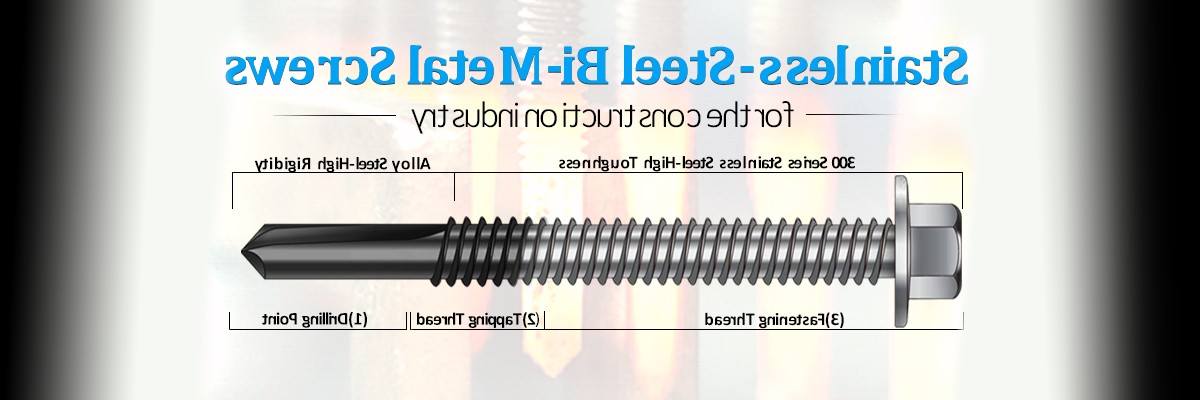
| High marine | Coastal, <1km from saltwater, splash zones | SS316 stainless, or bi-metal with SS316 body |
| Heavy industrial | Chemical plants, foundries, high pollution | SS304/316 stainless, or high-spec Ruspert coating |
| Mild industrial | General manufacturing, warehousing | Ruspert or CR-10 coated carbon steel |
| Light industrial / urban | Commercial and light industrial buildings | CR-10 or standard zinc-based coating |
| Pollution-free rural | Low-pollution rural or village settings | Standard zinc-based coating |
Why the middle categories matter most
Marine and pollution-free extremes are usually specified correctly, because the risk (or lack of it) is obvious on site. Most costly mistakes happen in the three categories in between, where a standard-coated fastener looks adequate on paper but is installed in a heavier-than-assumed pollution or humidity load — industrial estates near ports, buildings downwind of processing plants, or roofs with poor drainage that hold moisture longer than the design assumed.
When in doubt between two adjacent categories, specifying up one level costs little at the fastener stage relative to the cost of a callback or a warranty claim once the building is finished.
Matching coating to test standard
For projects that require documented proof of corrosion performance rather than a category label, TSR Europe can supply salt spray (ASTM B117 / NSS) and Kesternich (DIN 50018) test data for each coating and material combination, so the specification can be tied to a measurable result rather than a general description.
TSR Europe stocks stainless, bi-metal and coated carbon steel fasteners across all five corrosivity bands.
See the Stainless Steel range → See the Bi-metal range →Technical background adapted from TGR/Tsingri manufacturing specifications for the European market.