

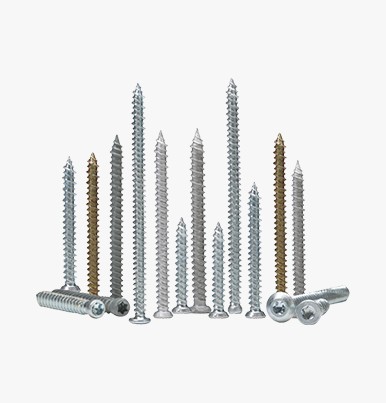
What makes hydrogen embrittlement particularly dangerous on a job site is timing: it typically occurs in carbon and alloy steel fasteners, and failure is delayed. A correctly torqued, apparently sound fastener can fracture hours or days after installation, with no warning and no visible sign beforehand — and when it happens, the failure is instantaneous.
Where the hardness threshold sits
Hardness is the key parameter. Common industry practice treats 320HV as the point where hydrogen embrittlement risk begins. Based on recent research and field experience, TGR treats 360HV as the more meaningful critical value beyond which the risk needs active management — a distinction worth knowing when comparing specification sheets between suppliers.
Why load matters as much as hardness
Fracture only occurs on fasteners under tensile stress, and the level of that stress is decisive: higher load makes hydrogen embrittlement fracture more likely. But it can still occur even when the applied load is below the fastener’s rated tensile strength — which is precisely why the failure catches installers off guard.
What the fracture surface reveals
A hydrogen embrittlement fracture typically shows two zones on the same break: a non-ductile (brittle) region, and a ductile region that begins at the extreme edge of the fastener and propagates across the remaining cross-section until it can no longer carry the load. Visually, the brittle portion closely resembles intergranular fracture from other causes, which is why identifying hydrogen embrittlement reliably requires scanning electron microscopy rather than a visual inspection alone.
Read Part 1 for where the hydrogen originates, and see Part 3 for how coating selection and process control prevent it.
See the Bi-metal range →Technical background adapted from TGR/Tsingri manufacturing specifications for the European market.