
Screw Basics: The Fastener Families, Materials and Drive Types Worth Knowing
Publicado en: Uncategorized 0
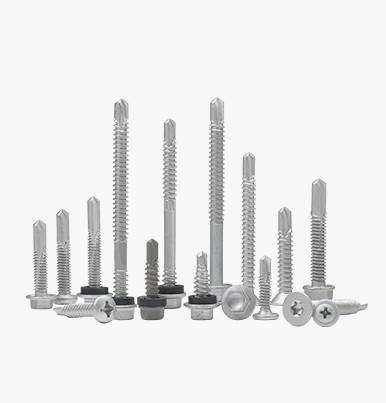
Assortment of construction screws and self-drilling fasteners

“Screw” is a catch-all word covering a wide family of fasteners, each engineered for a specific substrate, load and method of installation. Before comparing coatings, gauges or head styles, it helps to be clear on the basic categories — because specifying the wrong family is a more fundamental error than specifying the wrong finish.

The main screw families

  • Machine screws — designed to engage a pre-formed thread, such as a nut or tapped hole, rather than cut their own.
  • Self-tapping screws — cut a mating thread as they are driven; the sheet metal and plastic variants are the most common in construction and fabrication.
  • Self-drilling screws — combine a drill point with a self-tapping thread, drilling and tapping their own hole in metal-to-metal fixing in a single operation.
  • Wood screws — coarse-threaded for timber substrates, where the thread needs to bite into fibrous material rather than sheet or solid metal.
  • Drywall / concrete screws — engineered for masonry and cement-board substrates.

Common materials

MaterialTypical use case
Low carbon steel (coated)General construction, cost-effective where corrosion risk is low
Stainless steel 304 / 316Coastal, marine and high-corrosion environments
Stainless steel 410Self-drilling grade, hardened for drilling capability
Aluminium 5052Where galvanic compatibility with aluminium substrates matters
Brass / copper alloysDecorative or electrically conductive applications

Drive types

The drive — the recess the driver bit engages — also varies by application: slotted and Phillips remain the most common in general construction, hex socket suits high-torque installation, and specialised drives such as one-way (which locks in but cannot be removed) are used where tamper resistance is required.

Getting the family, material and drive right at the specification stage avoids the far more expensive problem of a fixing that fails, corrodes early, or has to be re-driven on site.

TSR Europe stocks self-drilling and self-tapping screws in carbon steel, stainless steel and bi-metal, across the full range of drives and head types.

See the Metal Construction Screws range →

Technical background adapted from TGR/Tsingri manufacturing specifications for the European market.
Self-Drilling Screw Selection: Matching Drill Point, Length and Thread Type to Gauge

Publicado en: Uncategorized 0
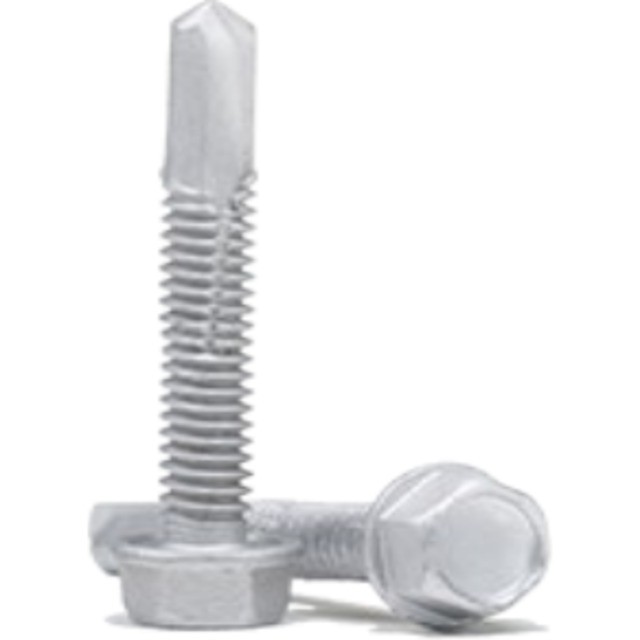
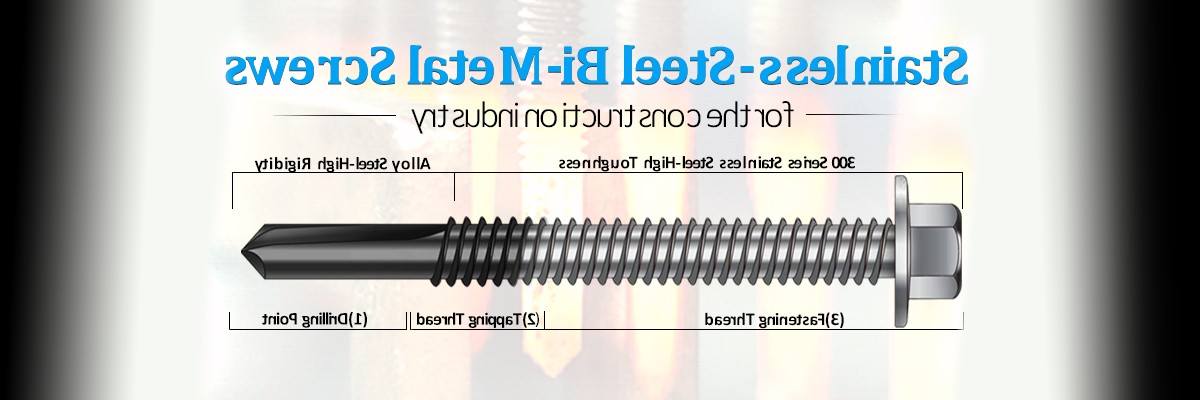
Stainless steel self-drilling screw with hex washer head, fine thread

A self-drilling screw that is under-specified for its drill point will strip or snap before it seats; one that is over-specified wastes drilling time and torque for no benefit. Matching drill point, thread type and minimum length to gauge is a basic but often overlooked step in specifying stainless round washer head self-drilling screws.

Matching drill point to gauge

As a general rule: a #2 point is used on gauges up to and including 6#, a #3 point on 8# and above, and a #5 point is reserved for the heavier 12# and 14# gauges. For 8# and 10# screws shorter than 1/2″, use the #2 point; longer 10# and above should use the #3 point.

GaugeDrill pointMinimum length
6# / 8##213mm
6# / 8##316mm
10##216mm
10##319mm
12##322mm
14##325mm

Going below these minimum lengths for a given drill point risks the point burning out before it clears the substrate, especially on thicker steel.

Full thread or half thread

Length also decides thread coverage on stainless round washer head self-drilling screws: below 1-1/2″ the screw is fully threaded; above 1-1/2″ it runs half thread, with a fixed 1-1/2″ of thread length regardless of overall screw length.

Head types

Three head types cover most applications: hexagonal washer head (HW) for maximum drive torque and a large bearing surface, pan head (P) for a lower profile where clearance is tight, and countersunk head (F) where the fastener needs to sit flush with the material surface.

BSD vs CSD thread

The two common thread families are not interchangeable: BSD is an AB-type self-tapping thread, cutting its own mating thread as it drives; CSD is a mechanical (machine) thread, intended to engage a pre-formed or pre-tapped thread. Specifying the wrong type for the substrate is a common cause of stripped fixings on site.

TSR Europe supplies stainless round washer head self-drilling screws across the #2, #3 and #5 drill point range, in HW, pan and countersunk heads.

See the Metal Construction Screws range →

Technical parameters adapted from TGR/Tsingri manufacturing specifications for the European market.

Matching Fastener Coatings to Your Environment: A Practical Corrosivity Guide

Publicado en: Uncategorized 0
Stainless and bi-metal fasteners selected for high corrosivity environments

The same fastener does not belong on a coastal roof and on an inland warehouse. Choosing a coating or material by habit, rather than by the corrosivity of the site, is one of the most common and most expensive specification mistakes in construction fastening. A practical way to get it right is to classify the installation environment first, then match the product to it.

Five environment categories, one selection logic

TGR groups installation environments into five bands, from most to least aggressive. The classification lines up closely with the atmospheric corrosivity categories used in ISO 9223, which many European specifiers already reference for coating and material selection.

EnvironmentTypical settingRecommended specification
High marineCoastal, <1km from saltwater, splash zonesSS316 stainless, or bi-metal with SS316 body
Heavy industrialChemical plants, foundries, high pollutionSS304/316 stainless, or high-spec Ruspert coating
Mild industrialGeneral manufacturing, warehousingRuspert or CR-10 coated carbon steel
Light industrial / urbanCommercial and light industrial buildingsCR-10 or standard zinc-based coating
Pollution-free ruralLow-pollution rural or village settingsStandard zinc-based coating

Why the middle categories matter most

Marine and pollution-free extremes are usually specified correctly, because the risk (or lack of it) is obvious on site. Most costly mistakes happen in the three categories in between, where a standard-coated fastener looks adequate on paper but is installed in a heavier-than-assumed pollution or humidity load — industrial estates near ports, buildings downwind of processing plants, or roofs with poor drainage that hold moisture longer than the design assumed.

When in doubt between two adjacent categories, specifying up one level costs little at the fastener stage relative to the cost of a callback or a warranty claim once the building is finished.

Matching coating to test standard

For projects that require documented proof of corrosion performance rather than a category label, TSR Europe can supply salt spray (ASTM B117 / NSS) and Kesternich (DIN 50018) test data for each coating and material combination, so the specification can be tied to a measurable result rather than a general description.

TSR Europe stocks stainless, bi-metal and coated carbon steel fasteners across all five corrosivity bands.

See the Stainless Steel range → See the Bi-metal range →

Technical background adapted from TGR/Tsingri manufacturing specifications for the European market.
What Is Ruspert (REXIUBAO) Coating, and Why CR-10 Is the Roofing Standard

Publicado en: Uncategorized 0
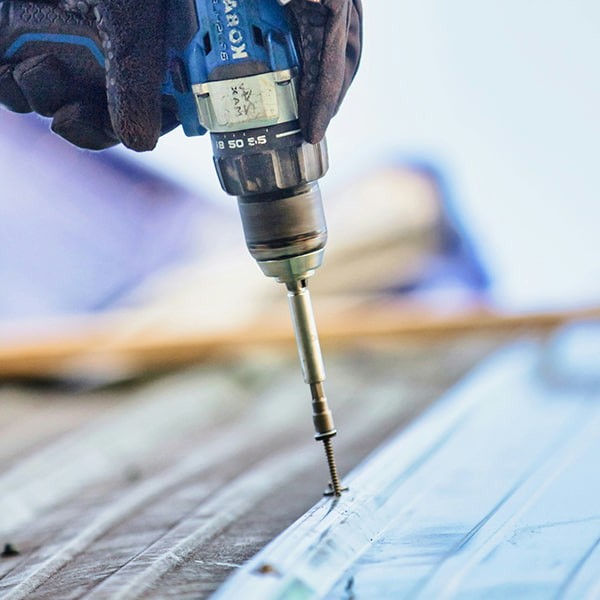
Corrosion resistant coated roofing fastener installation

Most fastener failures are not mechanical — they are corrosion failures that happen slowly enough to go unnoticed until a roof starts leaking around the fixing point. The coating on the screw is doing as much structural work over the life of the roof as the thread itself, so it is worth understanding what is actually under the surface finish.

Ruspert: a multi-layer system, not a plating

Ruspert (sold under names including REXIUBAO) is a multi-layer chemical conversion coating — a composite film rather than a single electroplated layer. That construction is what gives it three practical advantages over standard zinc plating: it keeps protecting the substrate even where the film is locally damaged, it holds colour and gloss over time instead of chalking, and it clears well beyond 1000 hours of neutral salt spray (NSS) testing where zinc plating typically fails within a few hundred.

TestRuspert performance
Neutral salt spray (NSS)500–2000 hours, meeting AS3566 classification
Kesternich (acid rain / SO²)5–30 cycles
EnvironmentalChromium-free, ROHS-compliant

CR-10: the roofing-specific standard

For insulation roofing fasteners specifically, TSR’s CR-10 electrocoating is built to a tighter benchmark: 15% or less red rust after 30 Kesternich cycles, aligned with FM4470 surface treatment requirements for roofing fasteners. Where a project needs more than the standard finish, TSR can also supply zinc plating, chrome plating, phosphating, black oxide or electrophoretic (electrocoating) treatments up to 1500 hours NSS, matched to the exposure and budget of the project.

The right coating is not the one with the highest number on the spec sheet — it is the one matched to where the fastener actually sits: inland and sheltered, standard commercial exposure, or coastal and marine.

TSR Europe supplies Ruspert Class 3/4 and CR-10 coated fasteners as standard across the roofing and structure fixing range.

See the Corrosion Resistant range →

Technical background adapted from TGR/Tsingri manufacturing specifications for the European market.

1 2 3 4