
Preventing Hydrogen Embrittlement (Part 3: Coatings, Hardness and Dehydrogenation Baking)
Publicado en: Uncategorized 0
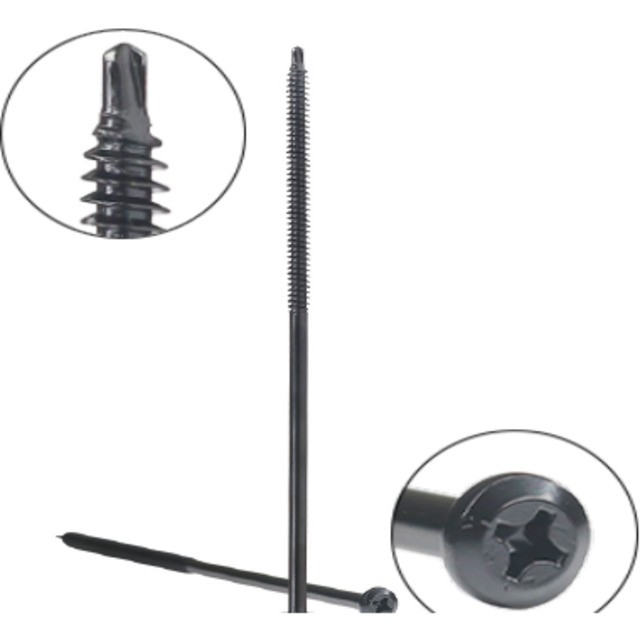
Extra heavy duty high-strength roofing fastener

Because hydrogen embrittlement is largely unpredictable once a fastener is in service, prevention has to start at the design and process stage — not as a fix applied afterwards. The two levers are avoiding hydrogen generation and absorption during manufacturing, and choosing surface treatments that do not introduce hydrogen at all.

Coatings that avoid the risk entirely

Several surface treatment options generate little to no hydrogen during application, making them the safer choice for high-strength fasteners:

  • Mechanical galvanizing
  • Dacromet
  • Geomet
  • Delta Protekt (chrome-free) coating
  • Xylan 1014 / 1400 / 1424 coating

Hardness as a design lever

Hydrogen embrittlement only affects high-strength fasteners. Where application conditions allow, and hydrogen cannot be fully removed during manufacturing, specifying a fastener below 320HV hardness removes the risk at the design stage rather than managing it afterwards.

Process control when high strength is unavoidable

When a high-strength fastener is genuinely required and pickling or electroplating cannot be avoided, several process controls reduce the risk:

  • Minimise pickling soak time wherever possible.
  • Always use an inhibitor component in pickling solutions.
  • Apply a dehydrogenation bake after any process that can introduce hydrogen — this post-process baking step is the critical control when hydrogen absorption cannot be avoided entirely.

None of these measures eliminate hydrogen embrittlement risk with absolute certainty on their own — which is why manufacturers combine hardness control, coating selection and dehydrogenation baking rather than relying on a single safeguard.

See Part 1 for where hydrogen embrittlement originates and Part 2 for how the failure develops and is diagnosed.

See the Metal Construction Screws range →

Technical background adapted from TGR/Tsingri manufacturing specifications for the European market.
How Hydrogen Embrittlement Fails a Fastener (Part 2: Hardness, Load and Fracture Diagnosis)

Publicado en: Uncategorized 0
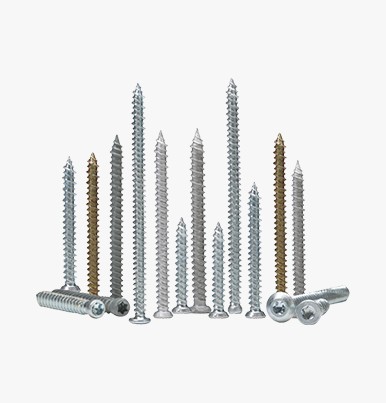
Light steel keel self-drilling screws, high-strength fastener group

What makes hydrogen embrittlement particularly dangerous on a job site is timing: it typically occurs in carbon and alloy steel fasteners, and failure is delayed. A correctly torqued, apparently sound fastener can fracture hours or days after installation, with no warning and no visible sign beforehand — and when it happens, the failure is instantaneous.

Where the hardness threshold sits

Hardness is the key parameter. Common industry practice treats 320HV as the point where hydrogen embrittlement risk begins. Based on recent research and field experience, TGR treats 360HV as the more meaningful critical value beyond which the risk needs active management — a distinction worth knowing when comparing specification sheets between suppliers.

Why load matters as much as hardness

Fracture only occurs on fasteners under tensile stress, and the level of that stress is decisive: higher load makes hydrogen embrittlement fracture more likely. But it can still occur even when the applied load is below the fastener’s rated tensile strength — which is precisely why the failure catches installers off guard.

What the fracture surface reveals

A hydrogen embrittlement fracture typically shows two zones on the same break: a non-ductile (brittle) region, and a ductile region that begins at the extreme edge of the fastener and propagates across the remaining cross-section until it can no longer carry the load. Visually, the brittle portion closely resembles intergranular fracture from other causes, which is why identifying hydrogen embrittlement reliably requires scanning electron microscopy rather than a visual inspection alone.

Read Part 1 for where the hydrogen originates, and see Part 3 for how coating selection and process control prevent it.

See the Bi-metal range →

Technical background adapted from TGR/Tsingri manufacturing specifications for the European market.
What Is Hydrogen Embrittlement in Fasteners? (Part 1: Where It Comes From)

Publicado en: Uncategorized 0
Bi-metal self-drilling screws, high-strength fastener range

Hydrogen embrittlement has been documented in fasteners since 1875, and more than a century of research has not fully closed the subject — specifiers and manufacturers still treat it with real caution. It is a genuine risk across building fasteners, roofing screws, bi-metal screws and coated screws: it alters the material structure and can cause a sudden, sharp loss of mechanical strength.

Two distinct origins

Hydrogen embrittlement failures fall into two categories, and telling them apart matters for how the risk is managed.

  • Environmental hydrogen embrittlement — hydrogen generated in service by the surrounding environment, most commonly as a by-product of corrosion.
  • Intrinsic (internal) hydrogen embrittlement — the more common failure mode, where hydrogen is introduced during manufacturing itself, before the fastener is ever installed.

Which materials are at risk

Not every metal is susceptible. The materials most affected are high-strength steels, titanium and aluminium alloys — low-strength carbon steel fasteners are, by comparison, at much lower risk.

Where the hydrogen comes from

Beyond corrosion in service, hydrogen can enter the metal at several points in manufacturing: the steelmaking process itself, breakdown of lubricants under load or heat, heat-treatment atmospheres, welding, and machining carried out in humid conditions. The research consensus points to electrochemical surface processes — pickling and electroplating in particular — as the source of the large majority of embrittlement risk.

Understanding where the hydrogen comes from is the first step; the next two parts of this series cover how the failure actually develops, and what a manufacturer does to prevent it.

TSR Europe supplies fasteners manufactured with dehydrogenation baking and controlled coating processes to manage hydrogen embrittlement risk.

See the Bi-metal range →

Technical background adapted from TGR/Tsingri manufacturing specifications for the European market.

Screw Head Types Explained (and What a Manufacturing Defect Actually Looks Like)

Publicado en: Uncategorized 0
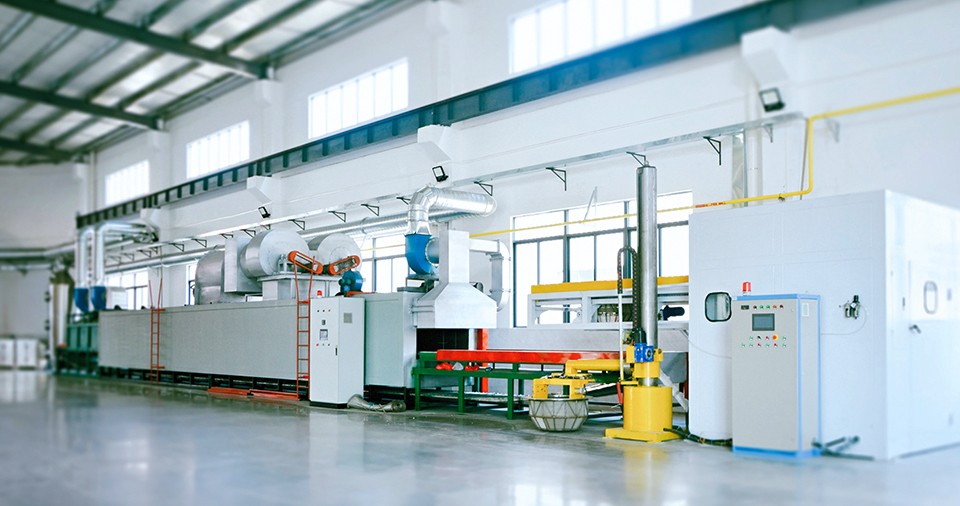
Fastener manufacturing and quality control

Choosing a head style is not purely aesthetic — each type suits a different combination of torque requirement, appearance, and how often the joint needs to be accessed again. And behind every well-formed head is a cold-heading process that can go wrong in visible, checkable ways.

Head styles and where they belong

  • Pan and cylindrical head — high head strength, general-purpose connections.
  • Semi-countersunk head — arc-shaped, sits nearly flush; used on precision instruments and mechanisms.
  • Countersunk head — fully flush; used wherever the head cannot protrude.
  • Hex socket head — accepts higher torque than an external hex, often replacing a hex bolt where a compact, clean profile is needed.
  • Cross-recessed (Phillips-type) — functionally similar to slotted, but the recess shape resists cam-out and stripping better, at the cost of needing a matched driver.

Beyond structural fixings: rings and locking screws

Two specialised types are worth knowing even though they are not structural fasteners in the usual sense. Lifting-ring screws are load-bearing hardware for installation and transport — they must be seated fully against the supporting surface and never loaded off-axis. Locking (set) screws fix the relative position of two parts by pressing an end — conical, flat, cylindrical or stepped — against the second part; the end profile determines whether the joint can be adjusted repeatedly or is meant to stay fixed.

What a manufacturing defect actually looks like

A crooked, poorly rounded, or burred head is not a coating problem — it is a cold-heading and die problem, usually traceable to worn or misaligned punch tooling. A cracked head is more serious: it points to a wire quality issue that should have been caught before heading, which is why raw wire — and for stainless in particular, confirming grade (such as 201 versus 304) — needs inspection before it reaches the header.

DefectLikely cause
Crooked or deformed headPoor first-punch setup or machine misadjustment
Head not fully roundedIncorrect or worn first-punch tooling
Burrs on the headExcess clearance between punch rod and die, or a short punch rod
Cracked headWire quality issue, or wrong die used for the head style, or lubricant failure

This is why fastener quality is decided long before the finished part reaches a job site — in wire inspection, die maintenance and process control at the manufacturing stage.

TSR Europe sources from TGR-manufactured fasteners with wire-stage inspection and die-controlled cold heading as standard.

See the Metal Construction Screws range →

Technical background adapted from TGR/Tsingri manufacturing specifications for the European market.

1 2 3 4